
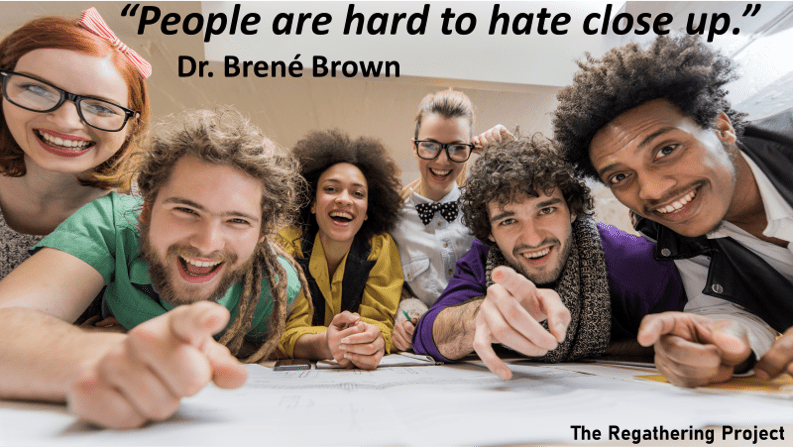
Without intentional effort, we often end up limiting our interactions to people who are “just like us.” Keeping within our relationship comfort zone can seem easier in the short term, but it will often rob us of more fulfillment and happiness down the road.
As an introvert who rarely traveled outside of the United States, going international in my relationships was definitely out of my comfort zone. Decades ago, Kathy and I belonged to a large church that was also the site for a Korean congregation and worship service. Kathy initiated our involvement with the group, which developed into my first significant immersion in the culture of another country. We enjoyed great feasts of Korean cuisine: I remember, chopsticks in hand, cooking bulgogi (thin, marinaded slices of beef) with the other men around a charcoal grill, collectively eating almost as many pieces as ended up on the dinner table.
We also shared our American traditions, hosting a couple Christmas Eve gatherings, as well as a classic day at the lake, taking turns serving as “captain” of our at-capacity pontoon boat. For several years, I co-led a Korean men’s Bible study, filled with mostly graduate students from the nearby University of Minnesota. I cannot overstate or even put into words the impact those years have had on my life.
Broadening our connections, besides brightening the lives of all involved, can also help bridge the divisions that stoke fear and hate around the globe. It is so much easier to dislike or even hate a group of people if we don’t know any of them. Yes, people are much harder to hate close up. Having mutually respectful relationships with those “different” from us–in any and every way–can serve as an important step toward filling the world with more love.
As we gain more experience in knowing the “Thems” of the world, we might discover that, like the line from the For King & Country song “Relate,” “we’re all the same in different kinds of ways.”
I invite you to share any experiences reaching beyond your own circle of relationships in the comment section below.
Patrick Klingaman
 The Regathering Project: Let's Transform the World, One Relationship at a Time