
In age filled with distractions, the gift of our attention is a rare but key factor in more fully connecting with others.
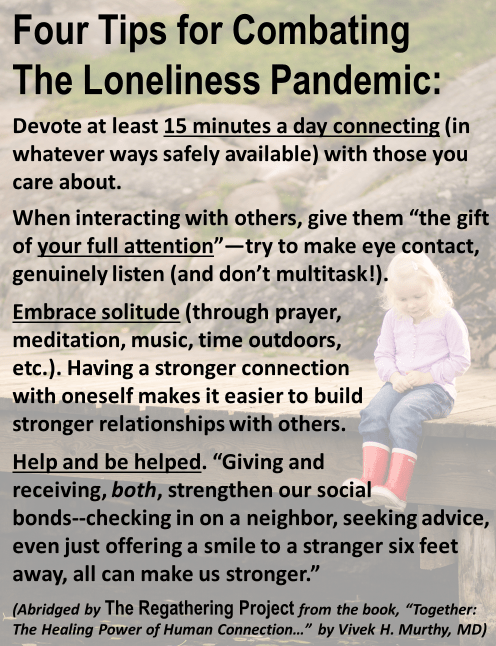
[In his book, Together: The Healing Power of Human Connection in a Sometimes Lonely World, Dr. Vivek Murthy offers four practical tips for how we can begin to overcome loneliness, both in our lives and the lives of others. This is the second of a four-post series.]
Here’s Tip #2 from Dr. Murthy: When interacting with others, give them “the gift of your full attention”—try to make eye contact, genuinely listen, and don’t multitask!
Try to remember a conversation with someone who gave you such complete attention that it felt like you were the center of their universe. Who hung on your every word. Who listened to you with all their being, like you were the only person in the world—or at least the only person in the room. It is hard to describe the feeling. That kind of attention can make a conversation with a stranger almost seem like you’ve found a new close friend.
Special interactions like that are increasingly rare today. Now don’t feel too guilty if you’re not a listening virtuoso; virtually no one is like that all the time. In this age of limitless distractions—including overloaded schedules, constant worries, and the ever-present screens of technology—offering our “full attention” to others has never been more challenging.
Most people just want to be seen and heard.
At first glance, this tip seemed straightforward to me, until I began to review my own behavior. Although I have flashes of attentiveness when I make a concerted effort, life’s distractions and my hyperactive brain tend to derail my efforts. Even when I don’t have a screen in front of me—I’m the world’s worst listener while watching TV—my thoughts often drown out the words of the person in front of me. Even successful listening can be interrupted by attempts to form a half-way intelligent response before the other person has finished speaking.
Most people in our chaotic world (especially those who consider themselves lonely) simply want to be seen and heard. To know that somebody notices them and wants to hear what they have to say. To have someone listen without quick judgment or pat answers. To have their thoughts fully understood and what they are feeling validated by a sympathetic ear.
That sounds like a tall order! Fortunately, the most important first step to successful interactions with others is simple: our presence, which doesn’t require any brilliant conversational skills on our part (Yay!). Even a moment of focused attention on another person and what they are trying to communicate may make a big impact.
If you’re like me, this will take a lot of practice. During the next interaction you have with someone else, try to consciously focus your attention better and see how that goes. Make eye contact. Keep your phone holstered. Try to ensure that the other person feels understood. Don’t rush to respond.
With practice, perhaps you and I can become people who make those around us feel truly seen and heard. Now that kind of attention could become contagious in the best kind of way.
If you have an experience with this that you would like to share, please leave a comment below.
Patrick Klingaman
 The Regathering Project: Let's Transform the World, One Relationship at a Time